
Finding People Through Ogden Records
Begin with the fact already known. A full name can lead to the Weber County owner roll, a Utah court party index, an official license, or a business filing. An old Ogden address is often more useful in the parcel search and a reverse city directory. A date of death may point toward the city cemetery, an obituary, probate, and a later deed. Each source answers a different question, so two records that share an address, date, or relative are much stronger than a lone name match.
Ogden is the Weber County seat. That puts city, county, and court records close together, but it does not merge them into one database. Municipal permits stay with Ogden City. Land and tax records sit with Weber County. Utah Courts keeps district and justice case data, while current certificates have controlled access through local or state vital-record offices.
- Search the name, phone, or address and write down every exact spelling, date, and place that appears.
- Use Weber Parcel Search when an owner name or street address is known. Capture the parcel and deed reference.
- Check Utah Xchange for public district or justice cases, narrowing common names by county, court, type, and date.
- For older Ogden residents, pair directories and newspapers with cemetery, probate, census, and deed evidence.
- Ask the correct custodian for an identified record that is not published online.
Keep a small source log. Record the portal, search terms, date checked, and exact identifiers. That prevents two Ogden residents with similar names from being merged by mistake.
Ogden Parcel Search Starts Three Ways
The free Weber County Parcel Search accepts a parcel number, owner name, or address. The county advises using a last name for an owner query because title may appear under a spouse or trust. For a doubtful address, a house number alone can broaden the result set. A nine-digit parcel number is split into book, page, and parcel parts, and a partial number can retrieve a related series.
The official parcel-search source shows how these three routes enter the same Ogden property index.
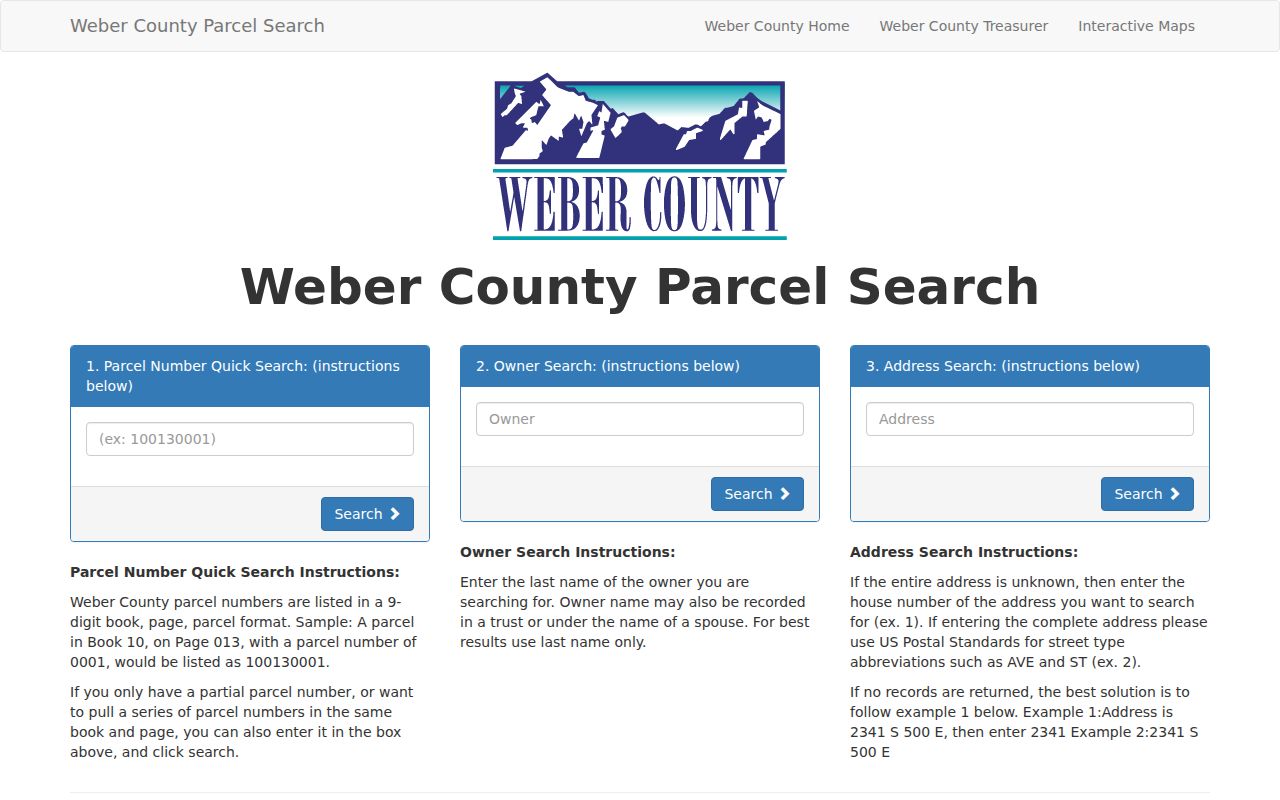
The results connect a name to a parcel number, situs address, parcel status, and detail view. Ownership Info can add a mailing address, deed entry, book and page, recorded date, old parcel numbers, plats, and a legal description. These are strong links to more records, but ownership and occupancy are not the same fact.
| Search route | Best starting text | Useful result |
|---|---|---|
| Owner | Last name, spouse, or trust name | Owner, parcel, situs, status |
| Address | Full address or house number | Parcel and property location |
| Parcel | Nine digits or a partial series | Book, page, parcel detail |
Note: Weber property screens combine Assessor, Recorder, and Treasurer data, so direct questions to the office responsible for the disputed field.
Ogden People Search Offices
The Weber Center is the main county records hub in Ogden. The Recorder/Surveyor handles recorded land instruments and parcel references. The Clerk/Auditor handles elections and marriage licenses, among other duties. Ogden City Recorder routes municipal administration records. For more detail on classifications and requests, use the focused Ogden public records access resource.
Weber County Recorder/Surveyor
2380 Washington Blvd., Suite 370
Ogden, UT 84401
801-399-8441
Online access is only one channel. The Recorder also offers counter and mail service, a document-order form for known references, free pre-1980 abstract folders, a paid modern abstract service, and a department GRAMA form. A specific file should go to its keeper before a broad portal request.
Ogden Address Geography Matters
A postal address that says Ogden may still lie outside Ogden City. The city assigns addresses inside its limits, while the Weber County Surveyor assigns them in unincorporated county areas. Check the county GIS and annexation context before asking for an address correction, permit, or city file. The right geographic authority determines which desk can answer.
Property records also carry two address ideas. The situs address identifies the land for location and emergency response. The mailing address is where the owner receives a tax notice, and it can point somewhere else. A vacant parcel may have no street address until there is a permit or structure. A mailing address, postal label, and owner name therefore cannot prove either city jurisdiction or current residence.
Address trail: street address → parcel record → legal description and plat → deed reference → owner history → reverse directory for occupants.
For older Ogden searches, watch for street change as well. Washington Boulevard appeared as Washington Avenue in earlier sources until sometime after 1936. Comparing plats and directories by year can keep the same place from looking like two addresses.
Ogden Deeds Bridge Past Owners
A current parcel card supplies the recorded entry, book, and page needed to reach the deed. The free property layer is not a full title search. Weber County separately offers free old abstracts for pre-1980 material, a paid Abstract Title service for richer modern research, document orders, plats, and counter help. The Recorder locates and copies records but does not perform a title search, interpret an instrument, or research records by telephone.
Three terms make the Ogden land trail easier to read.
- Grantor
- The person or entity transferring an interest in land.
- Grantee
- The person or entity receiving that interest.
- Legal description
- The recorded wording that identifies the land; a street address alone is not a substitute.
- Abstract
- A condensed title history that points to transfers and other claims affecting the parcel.
Use the free parcel screen first. Then choose the pre-1980 folders, paid abstract layer, known-document order, mail, or recorder counter based on the date and identifier in hand. Self-made copies, staff copies, maps, and certified copies have different fees, so confirm the current schedule before ordering.
Searching Ogden Court Records
Ogden falls within Utah’s Second District Court for felony, general civil, domestic, and probate matters. Justice courts cover lower-level offenses, ordinances, infractions, and small claims. Utah Xchange searches public district and justice indexes statewide. MyCase is the free route for a person’s own qualifying cases. Federal District of Utah matters use PACER, and bankruptcy is not part of Xchange.
The Utah Courts Xchange source explains remote and courthouse access to the public case index.
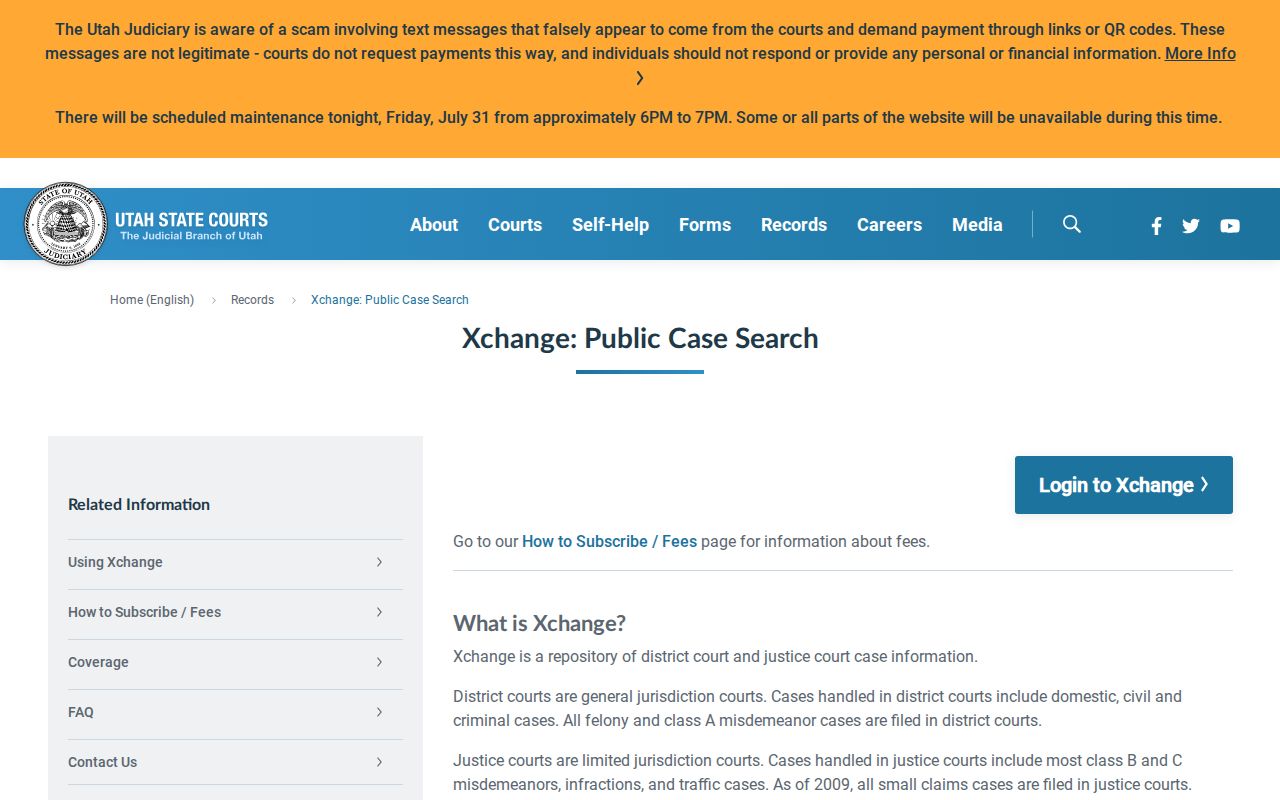
Xchange accepts jurisdiction, case number, last name or company, first name, case type, court scope, birth date, citation data, and date ranges. An asterisk broadens a name, such as a first name followed by an asterisk to catch middle initials. Common results stop at 500, so a Weber County, court, case-type, or date filter matters. Most district courthouses and some justice courts provide a free public terminal if the paid remote service is not suitable.
| Ogden court source | Record scope | Access channel |
|---|---|---|
| Second District Court | Felony, civil, domestic, probate | Xchange, public terminal, clerk request |
| Justice courts | Lower offenses, ordinance, small claims | Xchange where covered, court counter |
| District of Utah | Federal civil and criminal cases | PACER or federal clerk |
Adoptions, juvenile matters, sealed or expunged cases, civil mental-health commitments, and other nonpublic files do not appear. Older justice cases can also predate the CORIS system that feeds Xchange. A clerk request or State Archives search may explain an online gap.
Ogden Directories Preserve Occupants
Property rolls identify owners, not all residents. Reverse directories add the people and businesses tied to an Ogden address in a given year. Weber State’s Stewart Library Special Collections and University Archives accepts requests for Polk directory scans, with a dedicated address field. Staff normally supplies five-year intervals from 1951 forward unless a researcher asks for other years. Digitized examples are verified for 1878, 1906, and 1913, while official historic research cites a Polk series spanning 1890 through 1960.
The city’s current office directory is another useful route. The Ogden City Directory source can search a first or last name or browse a service category.
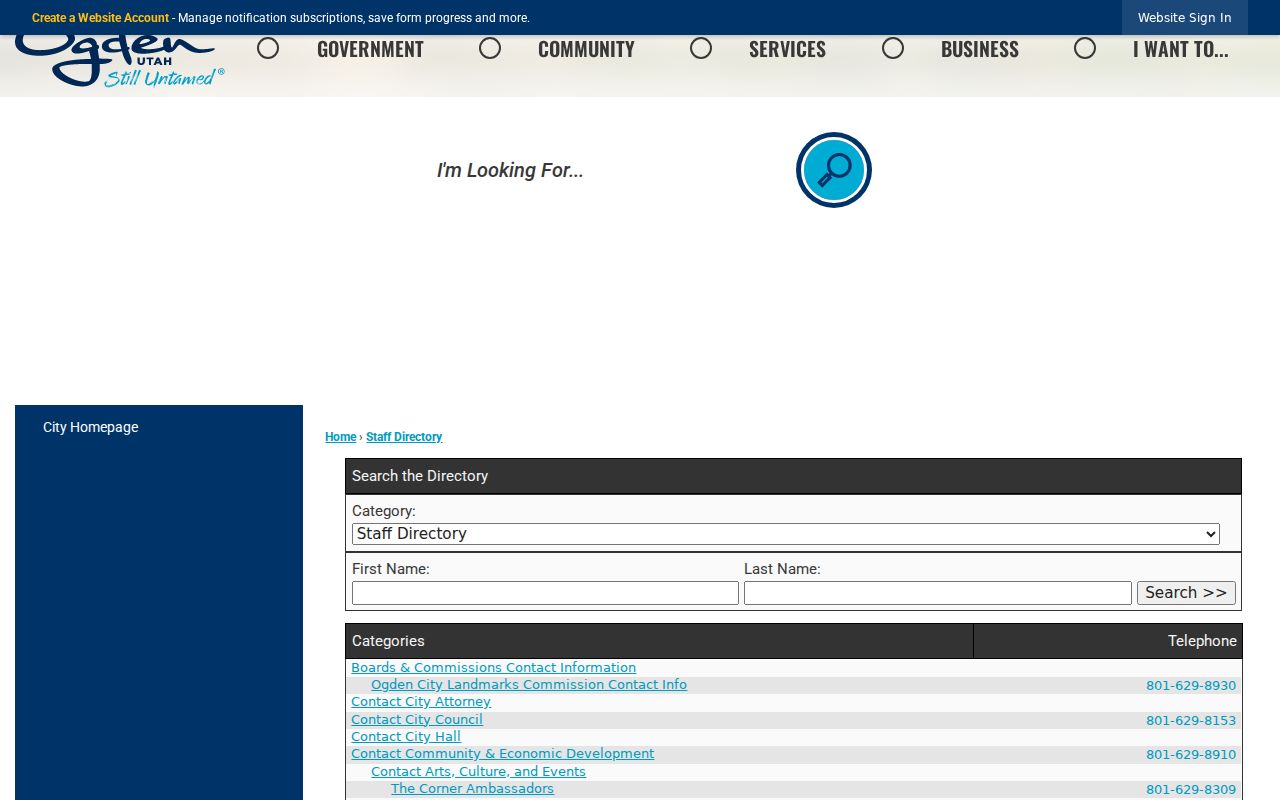
Its entries route people to city offices such as the Recorder, business licensing, cemetery, police records, justice court, GIS, and Union Station archives. It is chiefly an office and contact directory, not a complete list of Ogden residents. Historical work is stronger when a directory entry is paired with a parcel, newspaper, census, cemetery, or probate record from the same period.
Note: A directory occupation or boarding address can distinguish same-name residents even when the government case or permit file no longer survives.
Ogden Vital Records Trails
Weber-Morgan Health Department provides local birth and death certificate service, while the Utah Office of Vital Records and Statistics handles state certificate orders and marriage or divorce verification products. A verification is not the same as a full Weber County marriage file or Second District divorce case. Current marriage material belongs with the issuing county, and a full divorce record belongs with the court.
Recent Utah vital certificates are controlled records. The person named, immediate family, a guardian, or a designated legal representative may qualify, subject to identification and proof of relationship or authority. Orders can be made online, by mail, or in person through the authorized offices. A mail request needs the application or a signed letter with the required event facts, payment, and acceptable identification.
Older records move into public historical research after the statutory period. Birth records open after 100 years, death records after 50 years, and marriage or divorce records after 75 years. For a deceased Ogden resident, combine an eligible certificate or index with the cemetery register, obituary, probate case, and deed succession. Each source can confirm a different part of the family link.
Ogden Heir Searches Join Records
An estate question often crosses the line between current and historical records. Search a current public probate matter through Utah Xchange, then check the Weber probate index covering 1876 through 1979 for an older estate. A docket is the court’s running list of case events and filings. It may point to a petition, notice, or order, but the clerk or archives supplies the actual public file when it is available.
Obituaries may name married surnames and surviving relatives. The Ogden cemetery register can confirm burial details. Parcel Ownership Info supplies the current deed reference and prior parcel numbers, while a later deed may show the succession from an estate. These facts can be linked by dates and addresses, but a shared surname by itself is weak evidence.
The historical trail has limits. Probate index entries that expose adoption information may remain restricted for 100 years. Sealed matters are not opened by a general records request. When a person is seeking adoption-related information, Utah’s official adoption registry and original-birth-record process applies instead of an ordinary certificate order.
Ogden Custody Search Has Two Layers
The Weber County jail roster and Utah Department of Corrections search cover different groups. The county roster shows current local detention and lets a reader search first and last name or browse booking rows. The state search covers people under Utah correctional incarceration, probation, or parole. It does not include unsentenced county detainees.
The Weber County Sheriff roster source publishes the current browse and name-search interface.
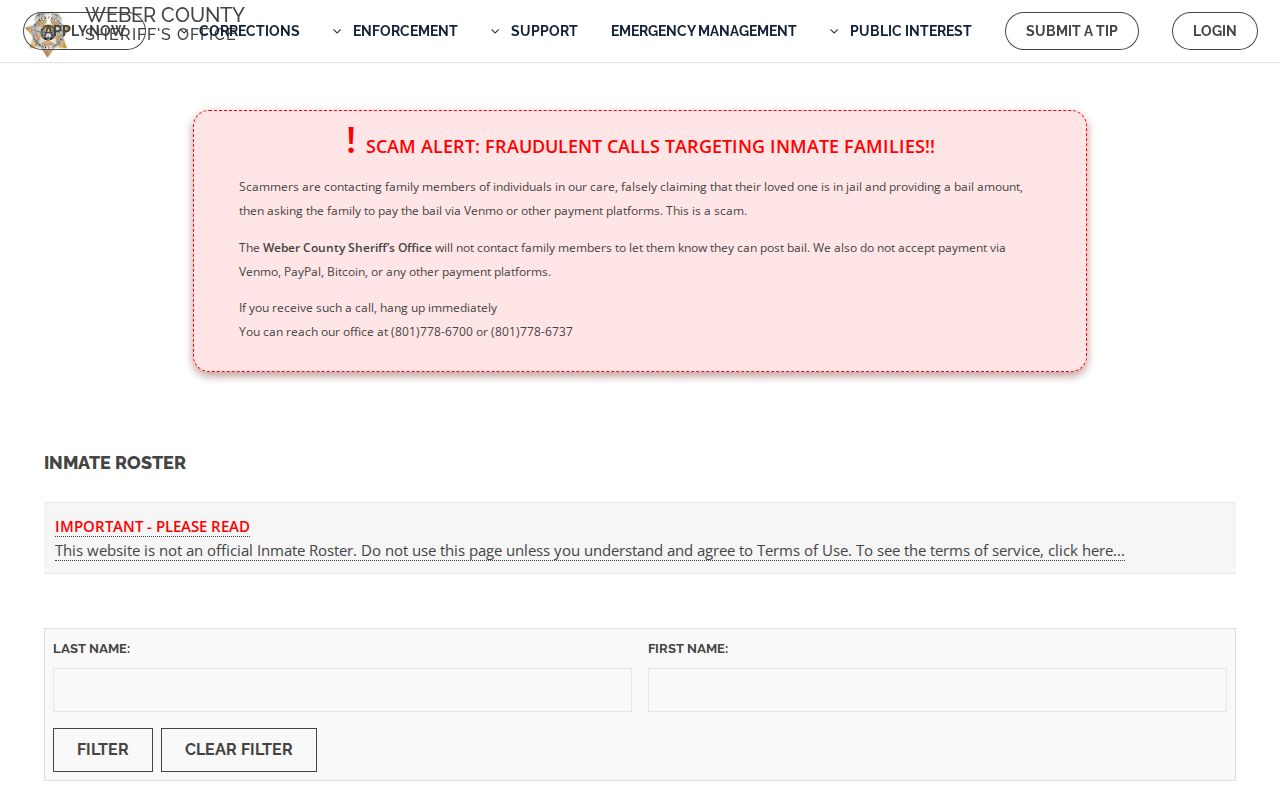
Roster rows can show booking time, name, gender, age, and a detail link. Details may include a case number, physical description, charges, and bail data. The county calls the web roster unofficial and says updates may occur less often than hourly. For an official inmate record, use the Sheriff records channel online or in person with a specific description and government photo ID.
Do not send money based on a call that claims to come from the jail. The Sheriff warns that it does not call families to offer bail or accept common peer-to-peer payment, cryptocurrency, or similar transfers.
Ogden License Records Verify Names
Utah’s Division of Professional Licensing can verify a person by name and profession or by license number. Name mode supports a beginning-with or containing match and can narrow by profession. License mode accepts a core number and an optional four-digit identifier. Results are useful for confirming that a name is tied to a regulated credential, but the record should not be stretched beyond the fields the agency publishes.
The official Utah license lookup source displays the name and license-number routes.
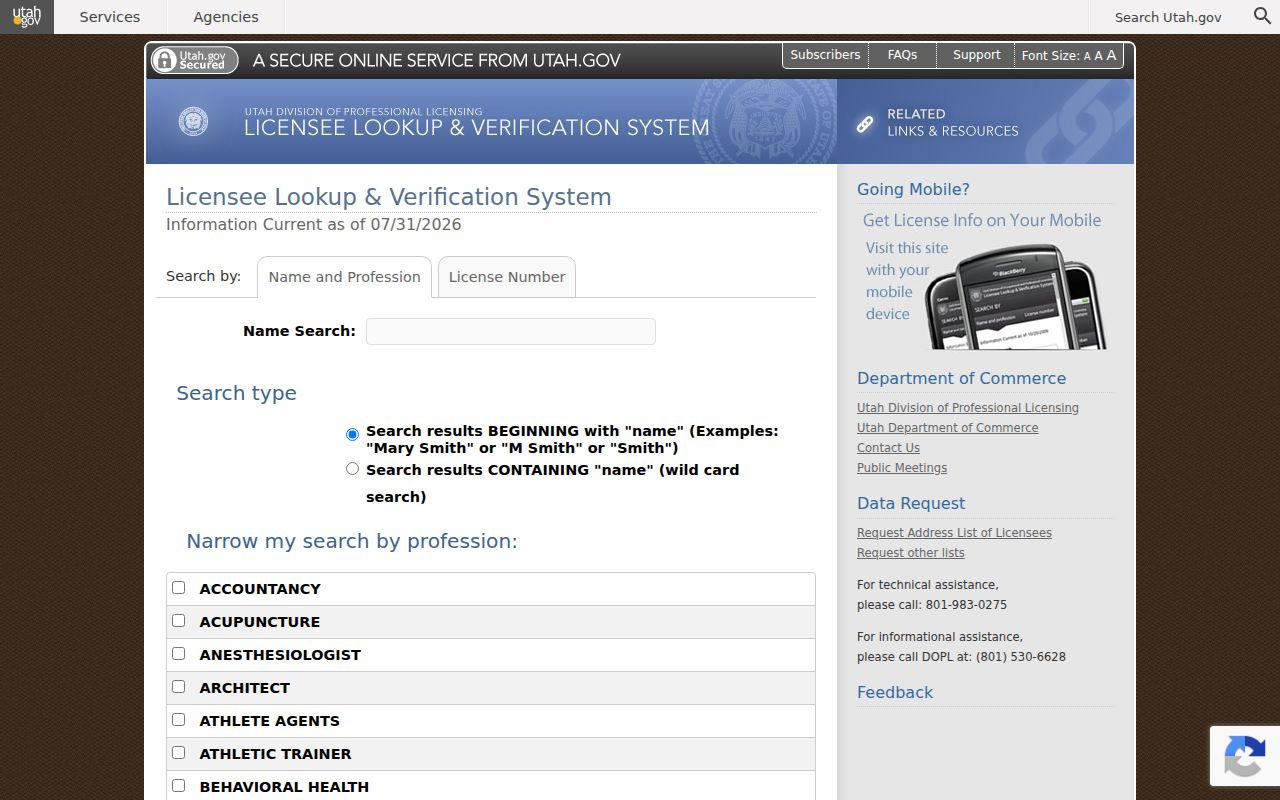
The profession filters cover many boards and license types. A separate disciplinary search uses an entity name or license number. Construction researchers should know that the Construction Business Registry includes only active licensees who opted in, so the main DOPL lookup is the broader verification route.
Ogden’s own business licensing office handles businesses operating inside city boundaries, but its applicant account is not shown to be a complete public license index. Use the city office for a local file and the state license tool for an individual professional credential.
Ogden Business Records Link Principals
A business name can lead to a person through Utah’s entity filings. The state search supports entity names and a Details view with an entity number. Published business data may include officers, principals, partners, registered agents, the business address, entity type, registration and expiration dates, status, and home state. Telephone and email are expressly excluded from the official downloadable data.
The Utah Business Search source shows the official entity-search entry used for Ogden businesses.
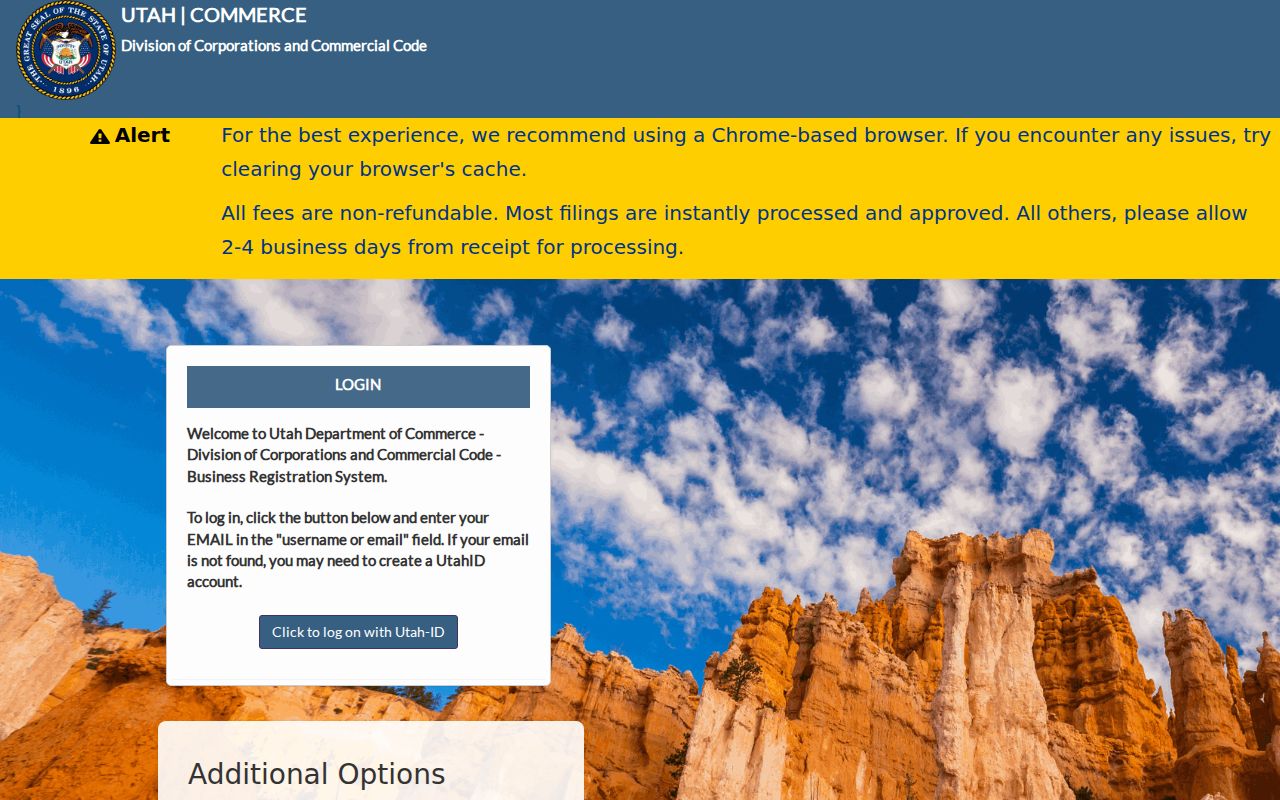
An assumed name, often called a DBA, is one of the state’s entity categories. Start with the business name, note the entity number, and compare the principal or agent with a parcel, license, permit, or court record only when dates and places align. A registered-agent address is a filing contact and does not establish a person’s home.
Ogden Voter Lookup Protects Identity
Utah’s individual voter tool is an identity-matched service, not an open browse of Ogden residents. Search by voter requires first name, last name, and date of birth. Search by address uses a street address with locality or ZIP controls. A successful match can return registration status and election facts such as precinct, district, polling or ballot information, and ballot tracking.
The Utah Voter Information source provides the official registration and election lookup.
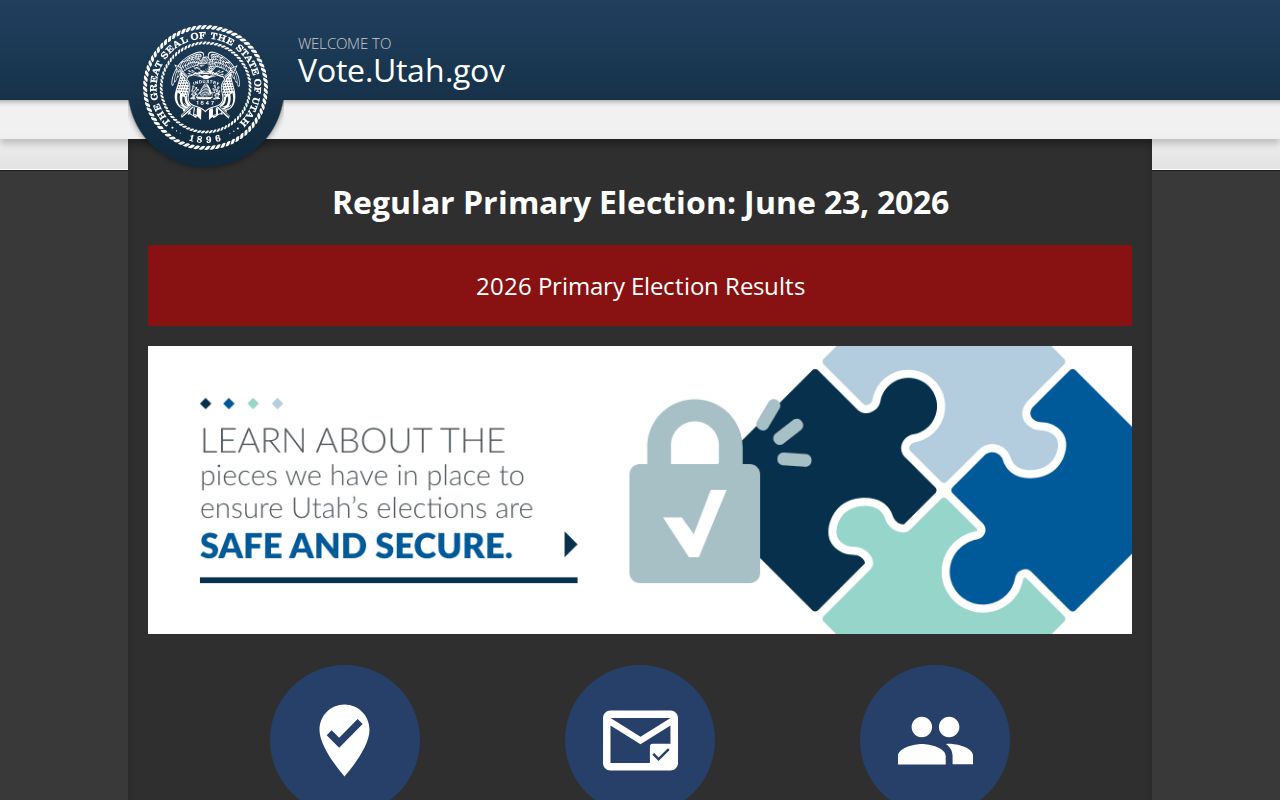
Public voter-list fields and a personal status check are separate access paths. Public-category data can include name, physical and mailing address, an age range or year, party affiliation, and participation history, never ballot choices. Full birth date, government ID numbers, Social Security number, email, phone, and signature are protected. At-risk voter information is also withheld. The dedicated Ogden voter records resource explains the statewide file and Weber Elections route without treating registration as proof of present occupancy.
Ogden People Search Needs Restraint
Public access does not permit stalking, harassment, threats, fraud, impersonation, or disclosure meant to cause electronic harassment. Utah’s current communication and privacy law includes a provision addressing disclosure of identifying information with that intent. Use names, addresses, and family links only for a lawful personal purpose, and avoid republishing sensitive facts merely because an official screen displayed them.
Lawful use: Stop when a search could expose a protected location or put a person at risk. Verify records with the custodian and respect every access limit.
Utah Safe at Home gives qualifying survivors a substitute address, mail forwarding, and service-of-process support. Government offices must accept the substitute address with a valid authorization card. The program protects the actual residence and other location details, while voter law has a separate at-risk classification.
Commercial compilation services may merge official records with purchased data. Their matches can be stale or attach the wrong relative or address. Official sources offer less convenience but better context about the record’s date, keeper, access class, and correction path.
| Source type | Main value | Main caution |
|---|---|---|
| Official record | Custodian, date, and defined fields | May be limited, paid, or offline |
| Commercial compilation | Broad initial lead | May be stale, merged, or unsupported |
| Archive or directory | Historical people and addresses | Coverage can have year gaps |
Ogden Territorial Records Still Speak
Weber County was founded in 1850, and Utah’s territorial recorder law began that March. County recorders copied transfers and other instruments into bound books, indexed them by name, and opened them for examination. Early local survey and transfer evidence can predate the federal land office that opened in 1869. A complete early Ogden title trail may therefore require both county books and a federal patent.
The surviving name routes are unusually rich. Utah Archives holds Weber’s 28-page copy of the 1850 census, which was actually dated in 1851 and lists names, age, sex, birthplace, and occupation. Digitized Second District indexes cover Weber civil actions from 1851 through 1969 and probate from 1876 through 1979. Criminal registers and indexes add another route, though adoption references and other protected material can limit access.
Ogden’s railroad growth makes those sources more valuable. People often appeared at hotels, boarding houses, shops, rail operations, or industrial sites instead of a family-owned parcel. Directories, newspapers, court minutes, oral histories, cemetery records, and Union Station collections can put a person back into that mobile setting. No authoritative evidence supports a Weber courthouse fire or major deed-record loss, so an online miss should lead to another index or counter, not an invented disaster story.
Note: Historical identity is strongest when occupation, address, date, and relatives agree across several Ogden records rather than one same-name entry.